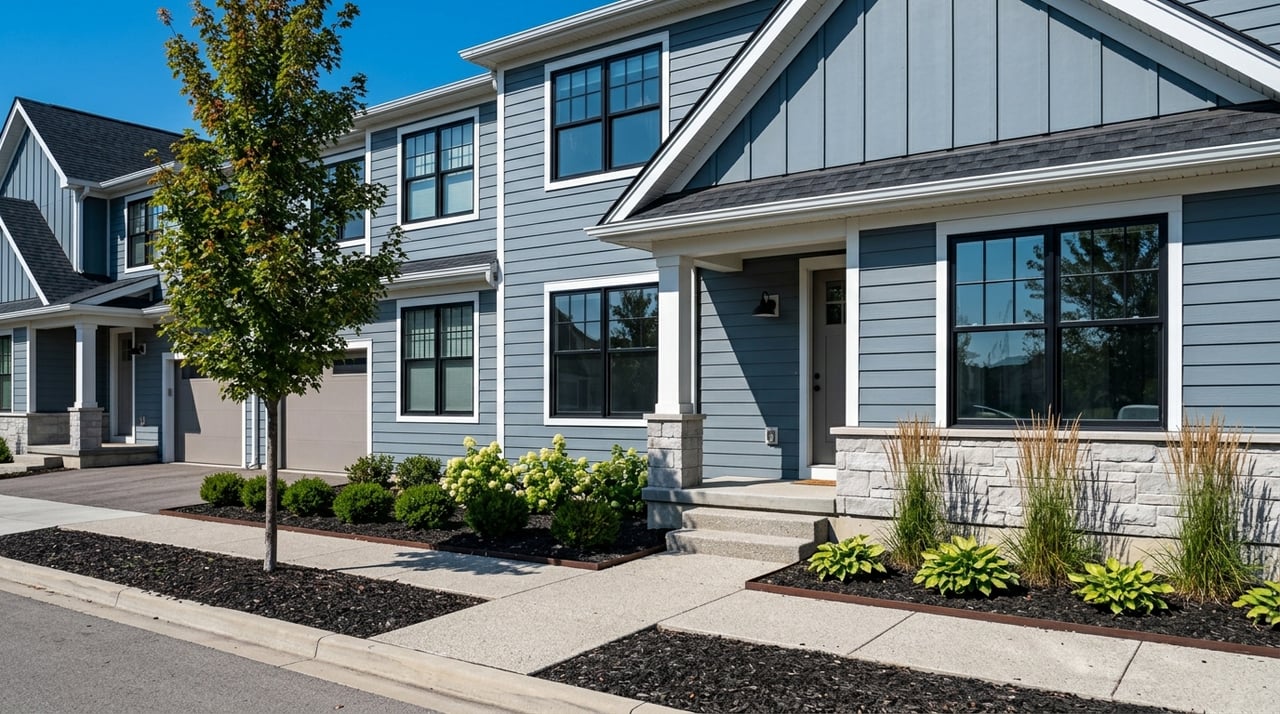
Most closings in New Richmond don't slip because of financing. They slip because someone treated the well and septic inspection like a home inspection add-on and scheduled it a week before closing. In St. Croix County, that sequencing is the single most common reason a rural or edge-of-town deal falls behind.
Here is the thesis worth holding onto: the property-transfer well inspection under Wisconsin's NR 812 is a visual check paired with a lab test, and the lab is the bottleneck. Once you understand that, the whole transaction reorders itself. The inspection stops being paperwork and becomes the pacing decision that everything else depends on.
Why This Matters More Here Than in the City
St. Croix County's population is nearing 90,000 people and groundwater is the sole source of residential drinking water supply, with approximately 50% of the population relying on private wells. For homes outside New Richmond's municipal service area, and for many acreage parcels inside the school district, that means both a private well and a Private Onsite Wastewater Treatment System, or POWTS.
The local market gives you very little slack to work with. A recent June 2026 county report put average New Richmond home values around $379,000 with homes typically going under contract in about four weeks, while the broader St. Croix County median sat near $426,000 with roughly 43 days on market. Four weeks is not a lot of runway when a single lab result can add a week.
What the Property-Transfer Well Inspection Actually Is
Buyers routinely assume the home inspector handles the well. They do not. State law does not require a well inspection or water testing for a property transfer, and DNR is not involved in the real estate transaction, but if a well inspection is conducted, state law has provided since June 1, 2008, that it must be done by a licensed well driller or licensed pump installer. A home inspector may not have the required license to evaluate a private well.
Here is what the inspection covers and what it does not:
| The inspector does | The inspector does not |
|---|---|
| Visually inspect the well and pressure system for NR 812 compliance | Remove the cap or enter the well |
| Collect samples for coliform bacteria, nitrate, and arsenic | Evaluate plumbing distribution or electrical |
| Search the property for unused wells | Predict pump or pressure tank failure |
| Record findings on DNR Form 3300-221 | Issue a pass or fail on water quality |
The inspector will visit the property to conduct a visual inspection of the well and pressure system, looking for features that do not comply with state well code. The inspector will not remove the cap or otherwise enter the well, so the results will be based on what is observed. The inspector is required to take samples of the well water and have them analyzed for bacteria, nitrates and arsenic by a certified laboratory. The inspector is also required to search the property for any unused wells that may not be properly filled and sealed. The inspector is required to provide results on a DNR form that clearly indicates whether the well and pressure system are in compliance with state well construction standards.
The compliance question and the drinking water question are separate. Test results may detect a contaminant, but this does not mean the well is noncomplying. Sellers should not conflate the two when responding to a buyer's concerns, and buyers should not walk away from a compliant well because a treatable nitrate reading came back on lab paper.
The Nitrate Number That Reframes the Negotiation
This is where local knowledge separates a competent representation from a generic one. The nitrate panel is not a box-check in St. Croix County. It is a real result with real frequency.
Analysis of the first year data from the county's Citizen Groundwater Monitoring Program included 178 private well water samples, of which 23 samples (13%) exceeded the 10 mg/L drinking water standard for nitrate. Statistical analysis also indicates that a private well's susceptibility to nitrate contamination is predominantly correlated to the well's casing depth and the surrounding land use.
That second sentence is the one that matters at the negotiating table. A shallow older well next to row-crop acreage is a different risk profile than a newer, deeper well in a wooded subdivision, and the price of a fix reflects that. Buyers who understand this ask for the well construction report before writing the offer, not after the inspection comes back hot. Well owners can pull those reports directly from the Wisconsin DNR records.
Arsenic is the other one to watch. Arsenic is considered a chronic health risk, and once thought to only be in eastern Wisconsin, arsenic has recently been found in groundwater in other counties throughout the state. A detection on the property-transfer report is not automatically a deal-breaker, but it changes the treatment cost math for the buyer's first year of ownership.
If a buyer wants a second look before or after closing, St. Croix County runs free and low-cost testing clinics. The county has a nitrate screening clinic scheduled for September 10, 2026, from 1:00 to 5:00 p.m. at the St. Croix County Services Center at 1752 Dorset Lane in New Richmond. That is a real, dated resource worth citing to a client sitting on an ambiguous result.
The Septic Side: SPS 383 and the Three-Year Rule
The other half of the inspection sits under a different Wisconsin code and a different licensing regime. Septic systems, known as Private Onsite Wastewater Treatment Systems (POWTS), are regulated by the Wisconsin Department of Safety and Professional Services (DSPS) under the SPS 383 code, with local permitting and enforcement handled by county zoning departments.
What catches sellers off guard is the maintenance cadence. Key regulations include a mandatory system inspection by a licensed professional every three years, a minimum 50-foot setback from a private well, and a recommended pumping frequency of every 3-5 years. If your last pumping receipt is from 2021 and the buyer's agent asks for maintenance records, you have a documentation gap that is easier to close before listing than during due diligence.
A practical note that saves money: do not pump the tank the week before you list. Please do not have the septic system pumped prior to the inspection. Critical information and clues are gathered prior to having the tank pumped. Your inspection will be limited if the septic system is pumped before these observations can be made. The process involves having the tank pumped during the inspection, but only after initial observations are made. After these observations are made, the tank will be pumped so the interior of the tank can be inspected. A well-meaning seller who books a pumping to "show a clean tank" can actually blind the inspector and force a redo.
Sequencing: The Timeline That Keeps Closings on Track
Working backward from a typical four-week New Richmond time-to-contract and a 30 to 45-day close, here is the order that keeps everything on rails:
- Week 1, day of accepted offer. Buyer's agent calls a licensed well driller or pump installer and a POWTS professional. Ask when they can pull samples, not just when they can be on-site. Water samples taken at the time of inspection need to be sent to a state-certified laboratory and typically take 3-5 days to get results.
- Week 1, home inspection. Runs in parallel. The general home inspector cannot sign the well form, so the two visits can happen the same day if the well pro is available.
- Week 2, results back. Buyer and seller decide whether any noncomplying features on DNR Form 3300-221 warrant repair, credit, or renegotiation.
- Weeks 2 to 3, cure period. If a repair is required, this is the window. A pump replacement can turn in days. A drainfield replacement cannot.
- Week 3 to 4, appraisal. Some lenders require the well test result in the file. Sequencing water testing before the appraisal keeps the file complete on the first pass.
- Closing. Final walkthrough, water on, pressure tank humming, DNR form in the packet.
The single most useful move in this sequence is calling on day one. A well inspection contingency benefits from scheduling the well inspection early to allow time for inspection and sample analysis in advance of closing. That is not filler advice. In a market with four-week contract windows, a five-day lab turnaround eats an eighth of your timeline.
What Sellers Should Do Before Listing
The homes that clear inspection cleanly all look the same in the file. Well construction report pulled and printed. POWTS maintenance card current with St. Croix County. Drainfield free of vehicles, sheds, and heavy planting. Walk the drainfield area and remove anything that does not belong there, including vehicles, heavy equipment, storage sheds, garden beds, or anything that compacts the soil. Trim any trees or large shrubs within 10 feet of the drainfield. Mow the area neatly. The drainfield should look like a normal, well-maintained lawn area.
If the system was replaced in the last decade, that is a marketing asset, not a footnote. A recently installed or replaced septic system is a selling point that should be marketed prominently in the listing, with the installation permit, as-built drawings, and any warranty documentation provided.
FAQ
Does the buyer or the seller pay for the well and septic inspection in New Richmond? It is negotiable and typically follows the purchase agreement, but in practice the buyer pays because the buyer commissions it. A pre-listing inspection paid by the seller can preempt the entire conversation.
Is a well inspection required to get a mortgage? State law does not require one, but lenders sometimes do. FHA and VA loans generally require water testing, and many conventional lenders require it when a well is present. Ask the loan officer in writing before scheduling.
What if the well is on the property but the home is on municipal water? The inspector still has to search for and address any unused well. An improperly sealed abandoned well is a common noncomplying finding and a solvable one, usually through a licensed driller filling and sealing the shaft to code.
How long is a property-transfer well inspection valid? The DNR does not set an expiration, but most buyers and lenders want results dated within 60 to 90 days of closing. Older reports usually trigger a fresh water sample at minimum.
If you are selling a New Richmond home on a private well or POWTS, or you are writing an offer on one, the team at Adam Bast Real Estate Group can help you sequence the inspections, read the DNR form, and keep the file moving. Reach out for a free home valuation and a straight conversation about what your specific property will need to close.